
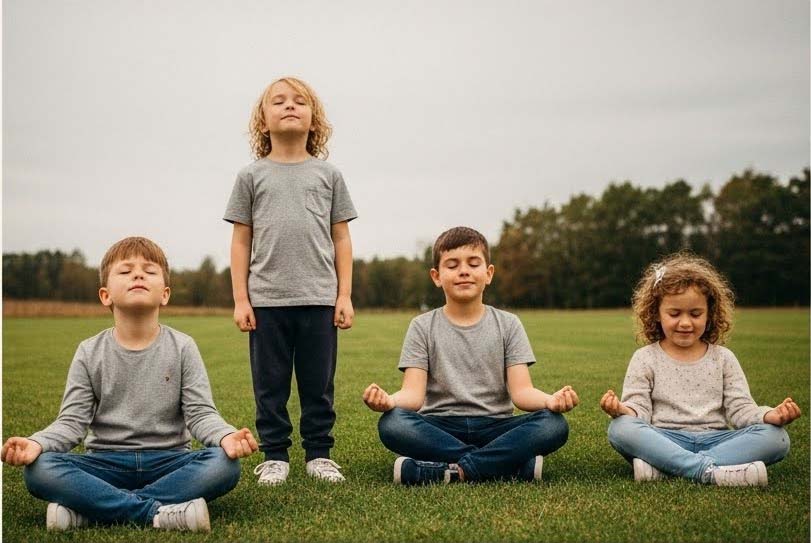
Explore how mindfulness practices can help preschoolers manage big emotions, improve focus, and build empathy.
Preschoolers experience a wide range of intense emotions, often shifting rapidly without a “pause button.” Mindfulness offers a way to help them navigate these “big feelings” with more calm and self-awareness. For children as young as three or four, mindfulness involves noticing thoughts, feelings, and surroundings without judgment, essentially teaching them to pause before emotional reactions. This practice is presented as a surprisingly suitable tool for this age group, aiming to help them understand and manage their developing brains and emotional regulation.
Historical Context of Mindfulness
Mindfulness has ancient roots in Eastern philosophies, specifically Hinduism and Buddhism, with a history spanning over 2,500 years. Its transition to a mainstream practice in the West is attributed to pioneers like Jon Kabat-Zinn, who developed Mindfulness-Based Stress Reduction (MBSR) in the late 1970s, making it secular and accessible. Thich Nhat Hanh further popularized mindfulness for everyday life. Adapting these practices for children began with figures like Susan Kaiser Greenland and her “Inner Kids” program, leading to a growing field of research and innovative approaches for young minds.
Benefits of Mindfulness for Preschoolers
Emotional Regulation
Helps children pause before impulsive reactions, enabling them to identify and manage emotions constructively, reducing tantrum frequency.
Improved Focus
Enhances attention span and concentration, crucial in a stimulating environment and foundational for academic success.
Stress and Anxiety Reduction
Equips children with coping mechanisms for big changes (e.g., starting preschool, new siblings) by helping them recognize and manage anxious thoughts.
Self-Control and Empathy
Fosters emotional intelligence by teaching children to respond thoughtfully and understand others’ feelings, promoting kindness and compassion.
Better Sleep and Overall Happiness
Contributes to a child’s general well-being. Studies suggest mindfulness interventions can improve self-regulation, attention, and academic performance, with one study indicating positive impacts on math scores. The key is to implement these practices in an age-appropriate, simple, short, and fun manner.
Playful Mindfulness Practices for Young Children
Mindfulness for preschoolers should be integrated into their natural curiosity and play. Examples include:
Breathing Exercises:
- “Belly Breathing with a Buddy”: Using a stuffed animal on the tummy to observe its rise and fall with breaths.
- “Bubble Breaths”: Taking slow, deep breaths in and gently blowing out, imagining blowing bubbles.
- “Starfish Breathing”: Tracing fingers of one hand with the other while breathing in and out.
- “Breathing Out Colors”: Imagining breathing in a calming color and breathing out a color representing worries.
Mindful Movement:
- Gentle yoga poses like “Tree Pose” or “Butterfly Pose.”
- “Animal Dancing”: Moving like different animals while focusing on bodily sensations.
Sensory Awareness:
- “Listening to a Bell”: Focusing on the sound of a bell until it fades.
- “Mindful Tasting”: Savoring snacks by paying attention to textures, flavors, and smells.
Imagination Activities:
- “Guided Imagery”: Imagining journeys like floating on a cloud or exploring a magical forest.
- “Worry Meditations”: Visualizing worries being placed in a boat and floating away.
Everyday Mindfulness:
- Gratitude practice before bed: Naming one thing to be grateful for daily.
- “Nature Walks”: Paying close attention to sights, smells, and sounds in nature.
Challenges and Ethical Considerations of Mindfulness
While beneficial, mindfulness for preschoolers is not without complexities and potential pitfalls:
- Overwhelm: Vulnerable children might be overwhelmed by uncomfortable feelings they are not yet equipped to process.
- Lack of Engagement: Some children may not be interested, and forcing participation can be counterproductive. Individual preferences must be respected.
- “Fad” Concerns: The effectiveness needs to be evaluated beyond its trendiness, relying on evidence-based practices.
- Compulsory vs. Optional: Mandating mindfulness in schools could undermine its principles of choice and self-awareness.
Careful, thoughtful implementation tailored to each child’s unique personality, developmental stage, and cultural background is essential. Mixed results from some large-scale studies, like the MYRIAD project, highlight the importance of engagement and developmental appropriateness.
The Future of Mindfulness for Young Children
The field of mindfulness for preschoolers is rapidly evolving:
Key Directions:
- Integration with SEL: Combining mindfulness with Social-Emotional Learning (SEL) programs for a holistic approach.
- Neuroscientific Research: Continued studies using neuroimaging to understand how mindfulness impacts brain regions like the prefrontal cortex and amygdala.
- Parent and Educator Training: Increased focus on mindful parenting and training for early childhood educators to create supportive environments.
Knowledge Gaps:
- Need for longer-term studies on the lasting impact of mindfulness interventions.
- Development of better, kid-friendly measurement tools for progress tracking.
- Creation of culturally adapted programs to ensure accessibility for all children.
The ultimate goal is to make these tools widely accessible to help children thrive with resilience, compassion, and well-being.
Conclusion: Cultivating a Mindful Generation
Mindfulness provides preschoolers with essential tools for emotional management, focus, and resilience, fostering emotional intelligence, self-awareness, and inner peace. It empowers children to navigate life with greater confidence, compassion, and joy. Parents and educators are encouraged to explore age-appropriate practices, starting with simple mindful breathing, to observe the positive changes in children’s focus, demeanor, and empathy, thereby nurturing a more mindful generation

I’m a longtime enthusiast of creative play and creative magic. I’m passionate about transforming everyday materials into extraordinary fun. I explore, test, and refine each project, ensuring it sparks joy, fuels imagination, and is delightfully achievable for families and educators. Driven by the belief that the best toys often come from imagination. I love empowering others to create playful memories.